



A Little Hope, A Long Journey
Reaching Children Beyond Our School
At Tashi Waldorf School, we believe that our responsibility towards children reaches beyond the classroom. Our daily work is centered on creating a safe, caring, and nurturing environment where children can grow through relationships, play, creativity, movement, and meaningful experiences. When children and families in our wider community face difficult circumstances, we feel connected to them and want to offer our support in whatever way we can.
The Situation in Nuwakot
The devastating floods of 26 August 2026 caused extensive destruction across Nuwakot and neighbouring districts, washing away homes, roads, bridges, schools, and other essential community infrastructure. Thousands of children were affected through disruption to their education, displacement, loss of homes and belongings, and the emotional impact of such a sudden disaster. Across Nuwakot, Rasuwa and Dhading, more than 14,000 children have had their education disrupted. In Nuwakot alone, an education assessment reported more than 3,000 students affected in Bidur Municipality, with 227 students and 11 teachers reported missing at the time of the assessment. Several schools, including the historic Tribhuvan Trishuli Secondary School, were destroyed.
A few days before our relief visit, Dil Maya had already travelled to the affected areas of Nuwakot to see the situation herself, meet children and families, and understand what kind of support was most needed. What she saw strengthened our feeling that we should not simply remain in Kathmandu and hear about the devastation from a distance. With this in mind, on 18 September 2026, three teachers from Tashi Waldorf School, together with one of Dil Maya’s cousins, travelled to Nuwakot carrying relief materials. We wanted to reach an affected school community, meet the children and teachers, and offer whatever support we could.
An Amazing Journey
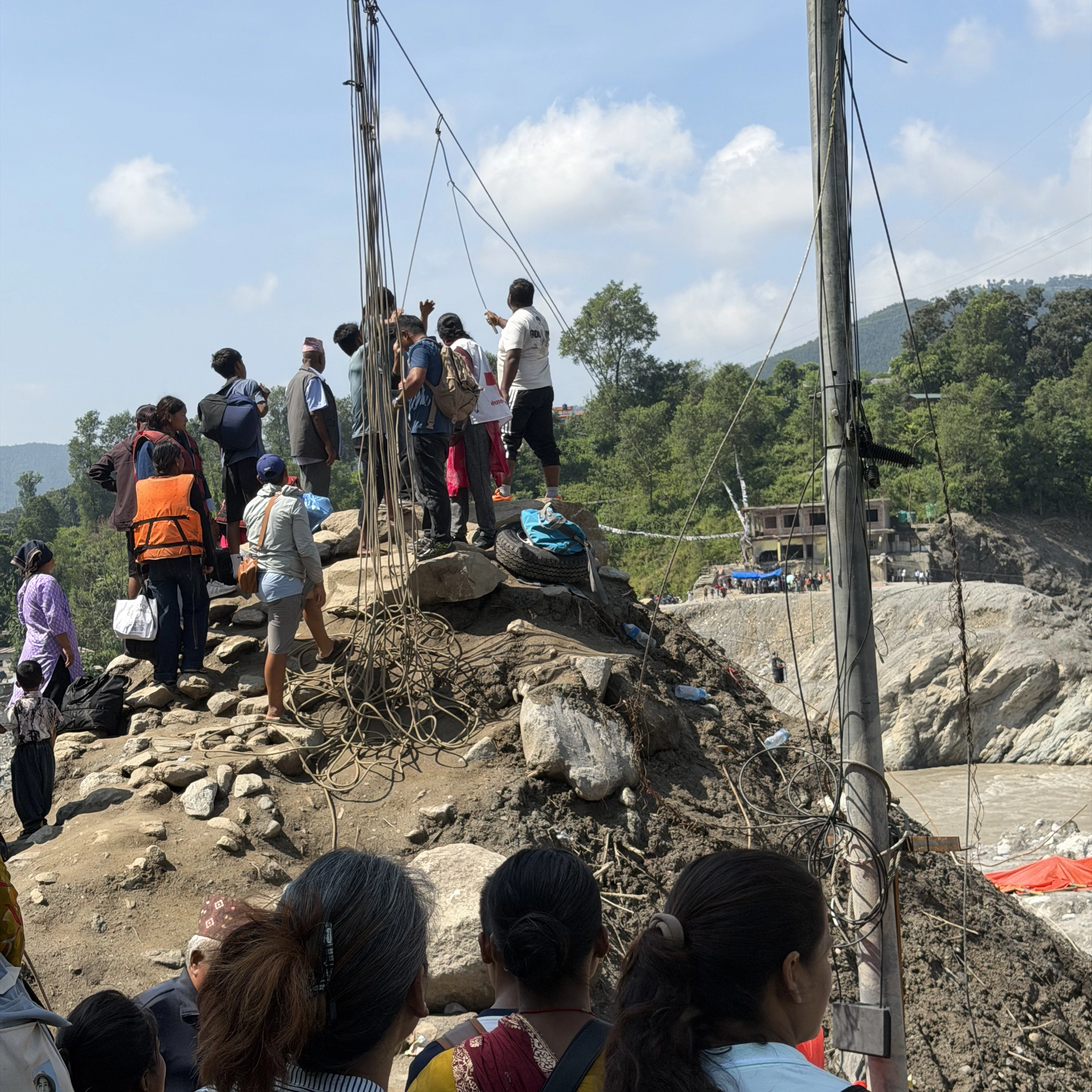
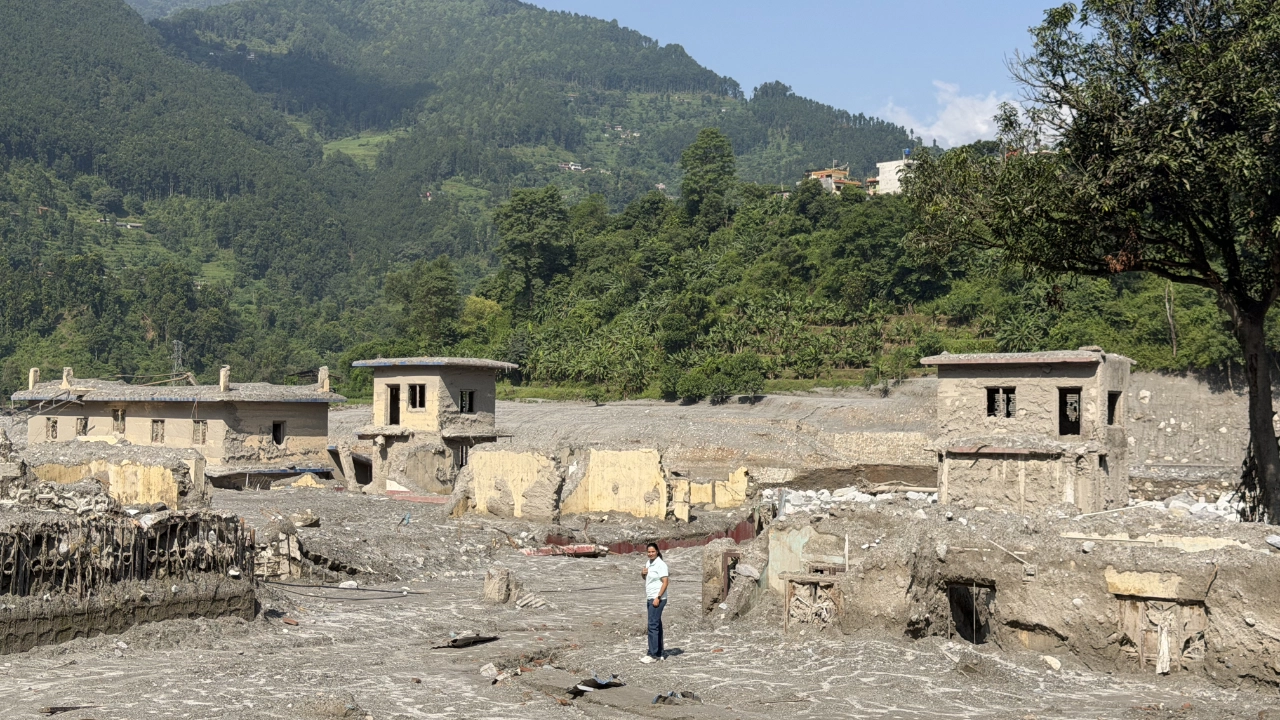
Our destination was Trishuli Basic School, but reaching the school was far more difficult than we had expected. The floods had washed away bridges and severely damaged roads, and in some places, the river could only be crossed by ropeway. Villagers had already been waiting since the previous day, and our team waited for several hours. As we waited, we could see the extent of the destruction around us. Homes, schools, banks, hospitals, and other buildings had been damaged or swept away, while the river had completely transformed the landscape.
One of the most difficult sights was a school that had once served around 1,600 students. After the flood, it was almost impossible to recognize the place as a school. The surrounding landscape had changed so dramatically that it was difficult to imagine how it had looked before the disaster.
After nearly 6 hours of waiting, two members of our team were finally able to cross the river with the relief materials. The other two remained on the opposite side throughout the day. The patience and cooperation of the local people touched us deeply. Even in such difficult circumstances, people were helping one another and sharing whatever they could.
Reaching Trishuli Basic School
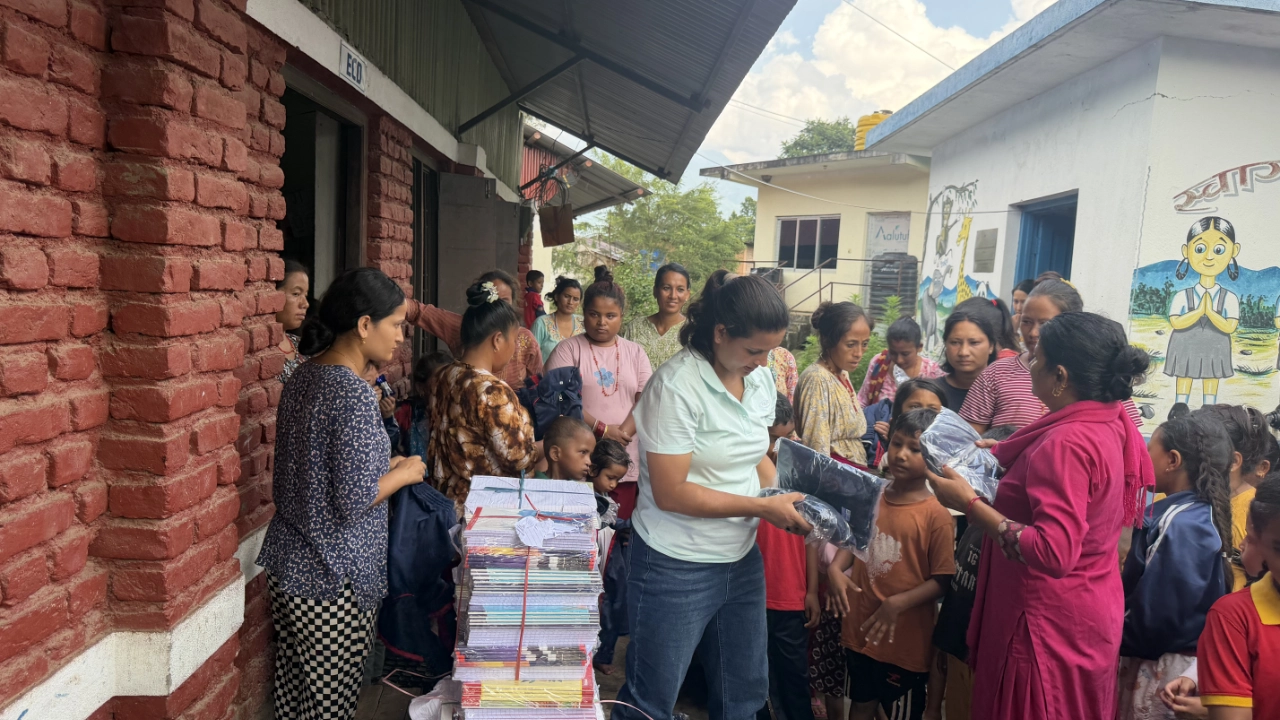
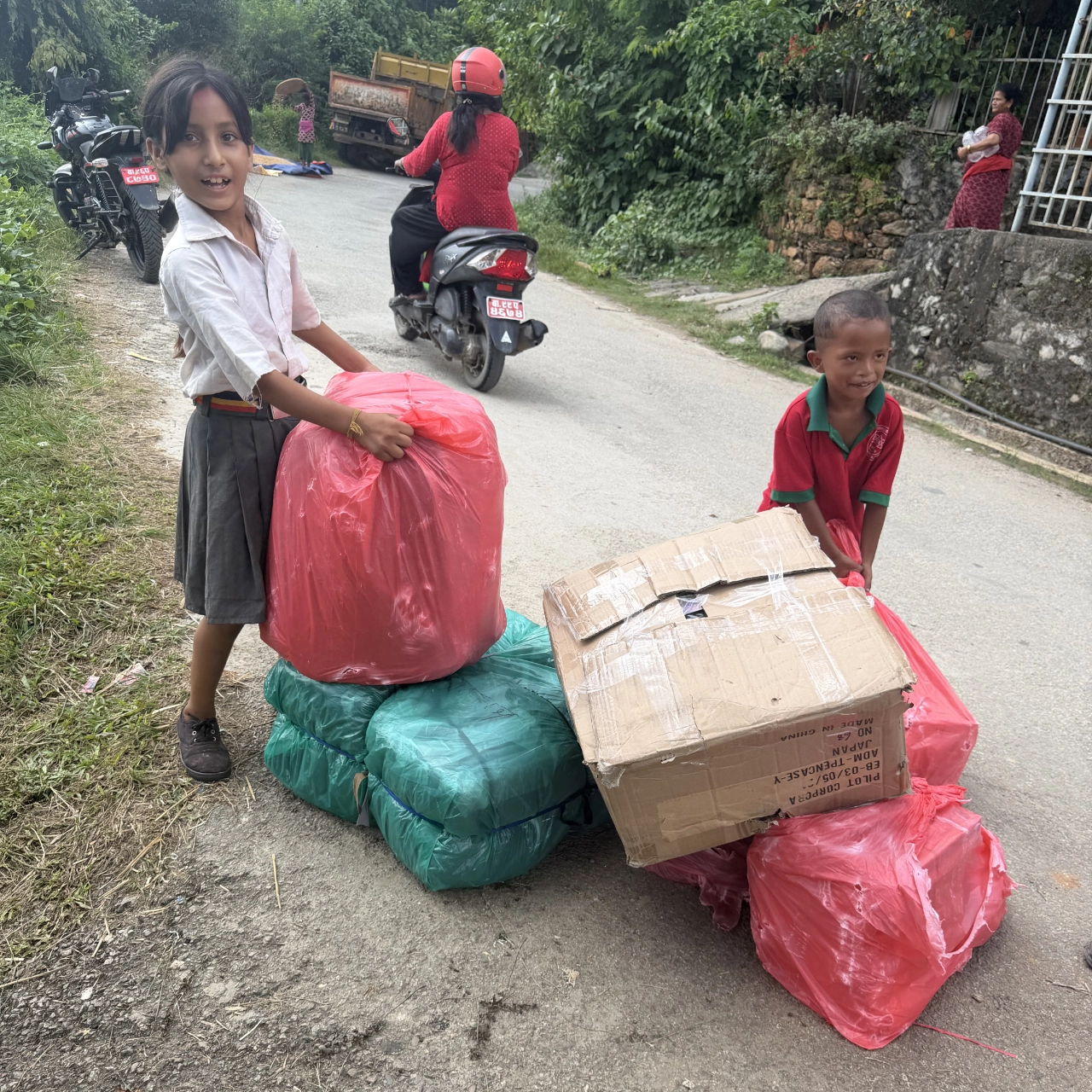
After the long journey, we finally reached Trishuli Basic School, Jugetar, Bidur, where we met the children, teachers, and families and handed over materials for all 80 students. These included tracksuits, school bags, stationery, colors, dolls, toys, and other creative materials.
The journey was challenging. The usual route through Dhadingbesi takes around five to six hours, with high transportation costs and difficult road conditions. As the road was not easily accessible, we chose a shorter alternative route, which still involved damaged roads, washed-away bridges, and crossing the river by ropeway.We had hoped to spend time with the children through play, movement, art, and creative activities, but due to the difficult journey and circumstances, we could not complete everything we had planned. Still, meeting the children and teachers, listening to them, and being there with the materials we could bring was meaningful to us.
A Long Journey Home
When we returned to the river after our visit to Trishuli, it was already 7:50 in the evening. We reunited with the two members of our team who had been waiting on the other side, and together we began the long journey back to Kathmandu.
It had been an exhausting day, but the experience stayed with us. We returned with a deeper understanding of the challenges facing the children, teachers, and families in the affected communities. Since our visit, other schools and communities have also reached out to us for support. We are listening to their needs and trying to understand their situations, but with our own limited resources, we are not in a position to help all but looking forwad to do for little more children.
Beyond the School Gates
This experience reminded us that the values we nurture at Tashi Waldorf School—care, connection, creativity, community, and respect for each child—do not stop at our school gates. Sometimes our contribution may be small, but the willingness to go, to listen, to meet people where they are, and to share what we can is itself an important part of caring for our wider community.
In this difficult time, we all need to come together and support one another in whatever way we can.